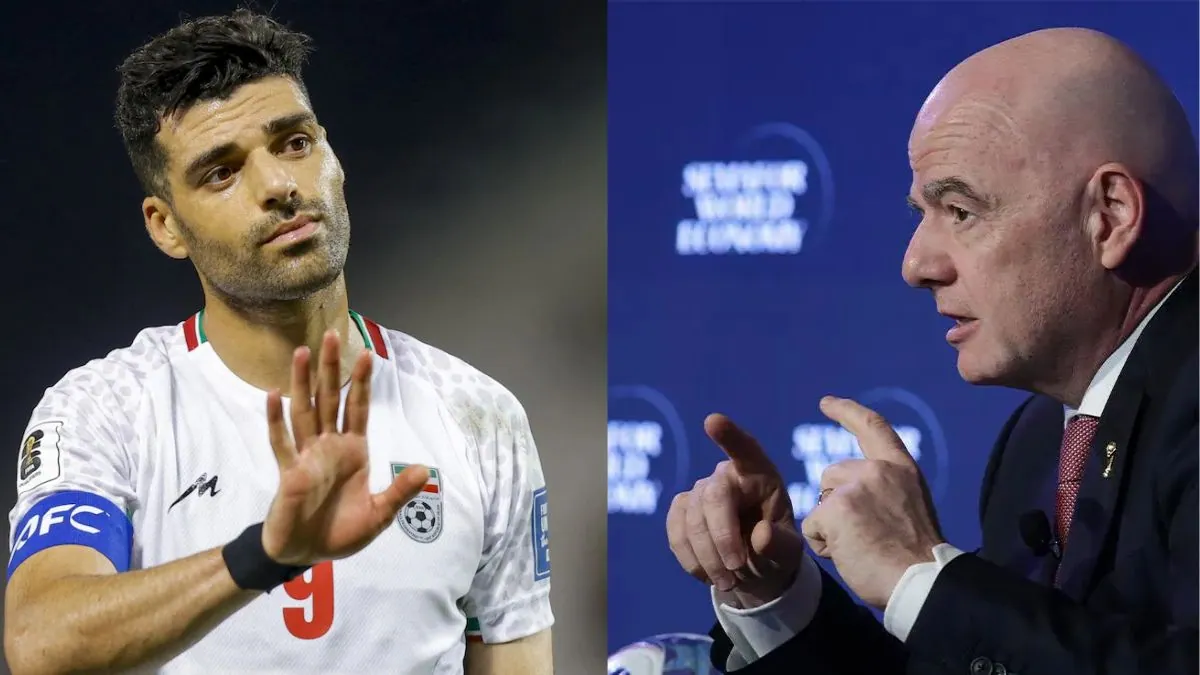
Less than four weeks before the opening whistle in Mexico City, one of the most extraordinary storylines in World Cup history is still playing out in real time. Iran — a fully qualified nation, drawn into Group G alongside Belgium, Egypt, and New Zealand — is at the center of a geopolitical and sporting crisis that nobody had written into the script. Will Iran Play in the 2026 World Cup?
War. Visa bans. A federation president was denied entry into a host country. Demands for guarantees. Talks with a FIFA president. Quiet diplomacy and very loud political statements.
If this were a novel, you’d say the plot was too much. But this is the 2026 FIFA World Cup, and nothing about it has been straightforward. So, will Iran actually play? Here’s everything we know.
How Iran Got to the 2026 World Cup
Let’s start at the beginning, because Iran’s qualification story deserves to be told on its own terms.
In March 2025, Iran secured their place at the FIFA World Cup 2026 after a 2–2 home draw against Uzbekistan in the third round of AFC qualification. It was a composed, measured campaign — Iran lost just one match in the entire Asian qualifying process and finished as the first non-host nation to officially confirm their berth in the tournament.
For a team ranked 21st in the world, that’s not a fluke. It’s a reflection of a well-organized Soccer program that has now qualified for seven World Cups, including four consecutive tournaments from 2014 onwards. They’ve never made it past the group stage, but they’ve always shown up.
The team was drawn into Group G with Belgium, New Zealand, and Egypt, with their matches scheduled for Los Angeles (SoFi Stadium) and Seattle (Lumen Field).
Their opener — Iran vs. New Zealand on June 15 in Inglewood, California — was on the calendar, the tickets were being sold, and the world was moving on.
Then, on February 28, 2026, everything changed.
The War That Changed Everything
On March 1, 2026, U.S. President Donald Trump announced “major combat operations” against Iran, launched jointly with Israel. The strikes targeted Tehran and other sites across the country. Among those killed was Ayatollah Ali Khamenei, Iran’s supreme leader for nearly four decades.
The Soccer world froze.
Within 24 hours, a senior official from the Football Federation of the Islamic Republic of Iran (FFIRI), Mehdi Taj — who also serves as a vice president of the Asian Football Confederation — publicly said there was “little optimism” that Iran would play. “What is certain is that after this attack, we cannot be expected to look forward to the World Cup with hope,” Taj said.
Iran’s sports minister, Ahmad Donyamali, went further. Speaking on state television, he was unambiguous: “Considering that this corrupt regime has assassinated our leader, under no circumstances can we participate in the World Cup. Our children are not safe, and, fundamentally, such conditions for participation do not exist.”
FIFA’s initial response was to say it would “monitor” the situation. The world waited.
FIFA, Trump, and the “Welcome” That Wasn’t Enough
As the days passed and the conflict continued — with missile and drone exchanges between Iran, Israel, and regional U.S. military bases — the diplomatic scramble intensified.
FIFA President Gianni Infantino met with President Trump, with Iran’s participation explicitly on the agenda. Following the meeting, Infantino issued a statement: “During the discussions, President Trump reiterated that the Iranian team is, of course, welcome to compete in the tournament in the United States.”
It sounded like progress. It wasn’t enough.
Hours after Infantino’s statement, Iran’s sports minister reiterated Iran’s position of withdrawal. Trump himself, meanwhile, sent a mixed signal — publicly saying Iran was welcome, but also reportedly discouraging the team from traveling to the U.S., citing concerns for their safety.
Marco Rubio, the U.S. Secretary of State, tried to strike a more welcoming tone, confirming that Iranian footballers would be permitted to enter the United States for the tournament. But he immediately added a significant caveat: individuals with documented ties to the Islamic Revolutionary Guard Corps (IRGC) could still face travel restrictions.
That caveat would become the heart of the entire visa controversy.
The IRGC Problem: When Military Service Meets Border Control
Here is where the crisis gets complicated in ways that go far beyond Soccer.
In Iran, military service is compulsory. Many members of the national team — including prominent players like Mehdi Taremi and captain Ehsan Hajsafi — completed their mandatory service through the IRGC. Under Iranian law, this is standard. Under U.S. and Canadian designations, the IRGC is listed as a terrorist organization.
Canada made this conflict tangible even before the war began. Ahead of the FIFA Congress in Vancouver in April 2026, Canada denied entry to FFIRI president Mehdi Taj himself, citing his alleged links to the IRGC. Taj was left unable to attend a major FIFA gathering as a federation leader.
At the FIFA Congress — a moment that would normally be unremarkable bureaucracy — Iran was notably absent when the Secretary General called the roll. The image of an empty seat where Iran’s delegation should have been sitting became one of the defining photographs of this whole saga.
The visa question isn’t just bureaucratic noise. Iran’s federation has made it the central condition of its participation. “All players and technical staff, especially those who served their military service in the IRGC — such as Mehdi Taremi and Ehsan Hajsafi — should be granted visas without any problems,” Taj stated clearly. Without that assurance, Iran argues that it cannot guarantee the safety and dignity of its delegation on U.S. soil.
The 10 Conditions: Will Iran Play in the 2026 World Cup?
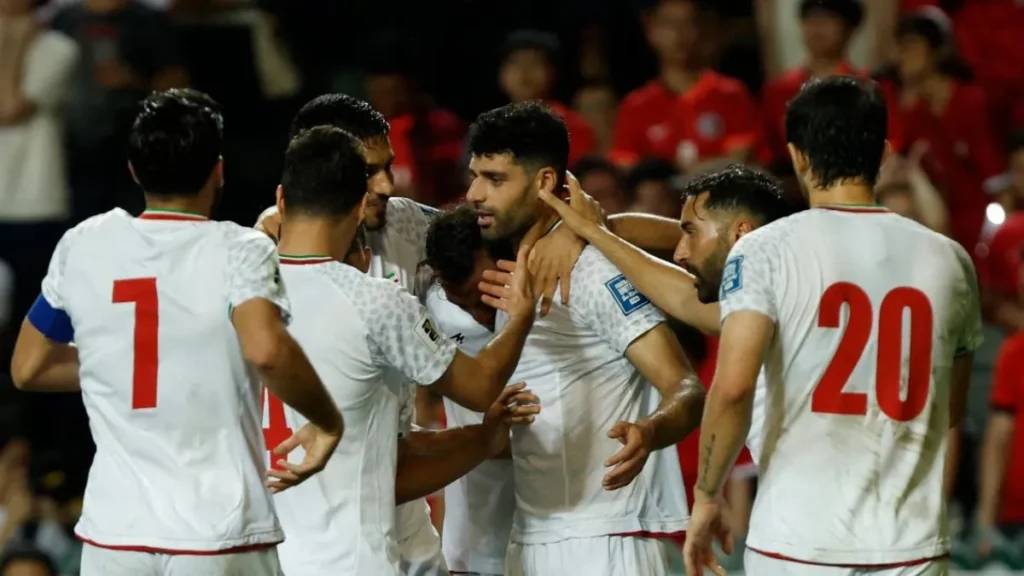
Iran Soccer Team set 10 conditions for World Cup participation. With the situation still unresolved and the tournament looming, Iran’s football federation laid out a formal list of demands — ten conditions that they say must be met before participation can be confirmed without reservation.
The Core Demands
While the full formal text has not been published in its entirety, the key conditions that have been publicly confirmed include:
Visa guarantees — All players, coaches, and technical staff must receive visas without issue, explicitly including those who completed IRGC military service.
Respect for national identity — Iran’s national flag and anthem must be fully honored throughout the tournament, with no interference or political framing by host organizers.
Security arrangements — Enhanced and dedicated security at airports, hotels, training facilities, and all routes to match venues in Los Angeles and Seattle.
No political harassment — Iranian players and officials should not be subjected to politically motivated questioning or treatment at border control or at any point during their stay.
Diplomatic neutrality — The host nations should not use Iran’s presence at the tournament as a political stage or for domestic political messaging.
The federation’s position has been consistent throughout: “We will participate in the World Cup tournament, but without any retreat from our beliefs, culture, and convictions.”
It’s worth noting that some of these conditions — particularly around security and flag protocols — are fairly standard asks for any international delegation. The IRGC visa issue, however, is genuinely novel territory, and it sits at the intersection of international law, U.S. immigration policy, and the internal rules of a sporting event that FIFA technically controls but cannot enforce across borders.
The “Pride Match” Controversy: Another Layer of Tension
If the war and visa issues weren’t enough, Group G handed Iran a completely separate flashpoint.
The local organizing committee in Seattle had pre-planned a designated “Pride Match” to coincide with local Pride events — a celebration of LGBTQ identity. Without any specific coordination with the draw, the match that landed in that slot was Egypt vs. Iran, both nations where homosexuality is criminalised under law.
FFIRI president Mehdi Taj stated that both federations had “objections” to the branding and called it “an irrational move that supports a certain group.” Egypt’s Football Association sent a formal letter to FIFA’s Secretary General rejecting any LGBTQ association with the game “in absolute terms.”
It added yet another layer of controversy to an already combustible situation — and gave those calling for Iran’s exclusion more ammunition, while those defending their right to participate pointed out that the host committee had created the problem.
Where Things Stand Right Now
As of mid-May 2026, the situation has shifted — cautiously — toward Iran playing.
The most significant development came in the days leading up to this article’s publication. The Iranian Football Federation issued a statement confirming that Iran will “definitely” participate in the 2026 FIFA World Cup. “We will definitely participate in the 2026 World Cup, but the hosts must take our concerns into account,” the federation said on its official website.
FIFA President Infantino, at the FIFA Congress, opened his address by confirming Iran’s participation. The Asian Football Confederation has said it has received no formal withdrawal notification and expressed hope that Iran would “solve their issues” and take the field.
Iran’s squad is based in Tucson, Arizona, for the tournament, a logistical arrangement that puts them close enough to Los Angeles without placing them directly in the highest-profile U.S. city environment. Mexico also offered to host Iran’s group stage matches on Mexican soil — an offer Iran reportedly welcomed — but FIFA rejected the request, insisting all matches proceed as originally scheduled.
The ceasefire between the U.S. and Iran following the military conflict appears to be holding — fragile but present. That has softened the immediate security concerns, though political tensions remain extremely high.
What Happens If Iran Withdraws?
There is no modern precedent for a qualified team withdrawing from a World Cup. The closest parallel is Yugoslavia’s removal from Euro 1992, when UEFA replaced them with Denmark at ten days’ notice due to UN sanctions. Denmark famously went on to win the tournament.
FIFA regulations give the governing body broad discretionary powers. Article 6 of the 2026 World Cup regulations allows FIFA to “decide on the matter at its sole discretion” and, if necessary, replace a withdrawing nation with another association.
If Iran withdraws, sources consistently point to Iraq as the most likely replacement — the next-ranked Asian team that didn’t qualify. However, Iraq’s own path has been complicated by the regional conflict and airspace closures. The UAE would be next in line if Iraq were already otherwise placed.
The alternative is simpler: Group G plays with three teams instead of four, with each side playing two group matches and the top two advancing to the Round of 32. Fewer games, less spectacle — not what anyone wants, but a manageable solution FIFA appears to have planned for.
What FIFA does not want is a last-minute decision. Replacement teams need preparation time. Logistics need planning. And fans who have bought tickets to Iran’s matches need answers.
The Bigger Picture: Sport and Politics in 2026
This story is, at its core, about something much larger than whether one Soccer team makes it to Los Angeles in June.
It’s about whether a global sporting event can function as a genuinely global event when one of its host nations is actively at war — or in a ceasefire — with a participating team. It’s about whether FIFA’s foundational principle of separating sport from politics means anything when visa rules, military designations, and border control policies are all in play.
Iran’s players didn’t start this war. Mehdi Taremi didn’t designate the IRGC. Ehsan Hajsafi — the same captain who removed his cap in solidarity with protestors in Qatar in 2022 — is now caught between his country’s political reality and his desire to compete on the world’s biggest stage.
There’s something quietly tragic about a team that has qualified cleanly, trained professionally, and done everything right on the pitch — finding itself as a political Soccer of a very different kind.
FIFA has preached political neutrality for decades. The 2026 World Cup is testing what that actually means when reality gets complicated.
The Latest: Iran Is (Probably) Playing
As things stand today, Iran is in. The federation has confirmed participation. Infantino has confirmed it from the FIFA side. The squad is in Tucson. The schedule shows Iran vs New Zealand on June 15 at SoFi Stadium in Inglewood.
| Date | Match | Venue | US Local Time (PDT) |
|---|---|---|---|
| June 15, 2026 | Iran vs New Zealand | SoFi Stadium (Los Angeles, CA) | 06:00 PM |
| June 21, 2026 | Belgium vs Iran | SoFi Stadium (Los Angeles, CA) | 12:00 PM |
| June 26, 2026 | Egypt vs Iran | Lumen Field (Seattle, WA) | 02:30 PM |
But the visa question for IRGC-linked players and staff has not been publicly resolved. The 10 conditions have not been formally signed off on by the host nations. And the geopolitical backdrop remains volatile enough that no one is claiming this saga is fully over.
Watch this space. In the 2026 World Cup, Iran’s off-field story may prove to be as dramatic as anything that happens on the pitch — and their opening match against New Zealand is exactly four weeks away.
World Cup Historical Records
- 1998 World Cup: Defeated the United States 2–1 in a legendary encounter.
- 2018 World Cup: Earned a 1–0 opening-match victory over Morocco.
- 2022 World Cup: Shut out Wales 2–0 courtesy of two historic late goals in stoppage time.