


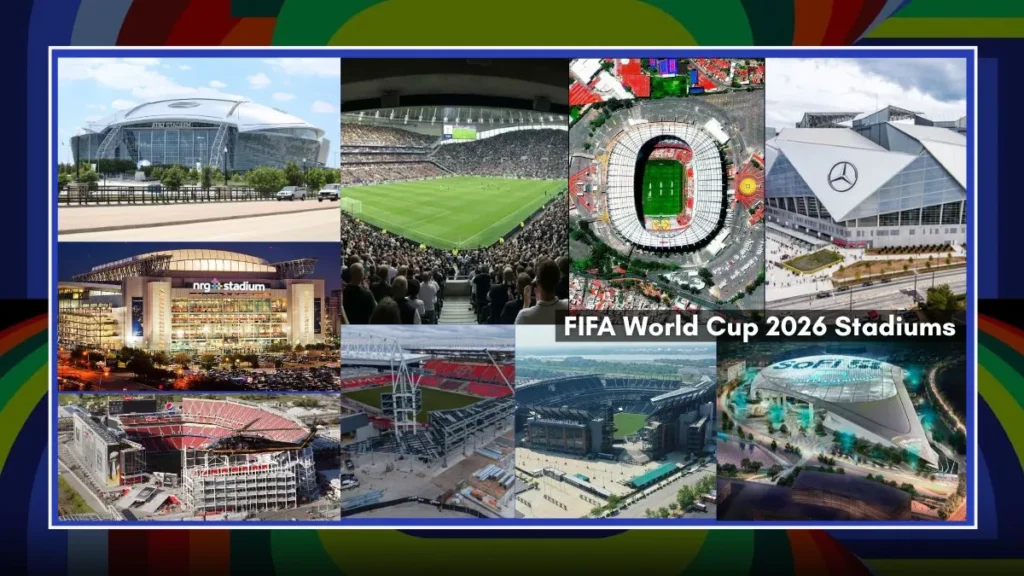
Explore the complete guide to the FIFA World Cup 2026 Stadiums as the countdown to the biggest sporting event in history has officially entered its final stretch. As of March 2026, the infrastructure across the United States, Canada, and Mexico is reaching its peak readiness. With the expansion to a 48-team format, the 23rd edition of the FIFA World Cup is set to be a spectacle of unprecedented scale, featuring 104 matches across 16 iconic venues.
Whether you are planning to attend the opening match at the historic Estadio Azteca or the grand finale at the MetLife Stadium, this comprehensive guide covers everything you need to know about the FIFA World Cup 2026 stadiums, host cities, and fan experiences.
FIFA World Cup 2026 Stadiums: The Three-Nation Collaboration: Western, Central, and Eastern Regions

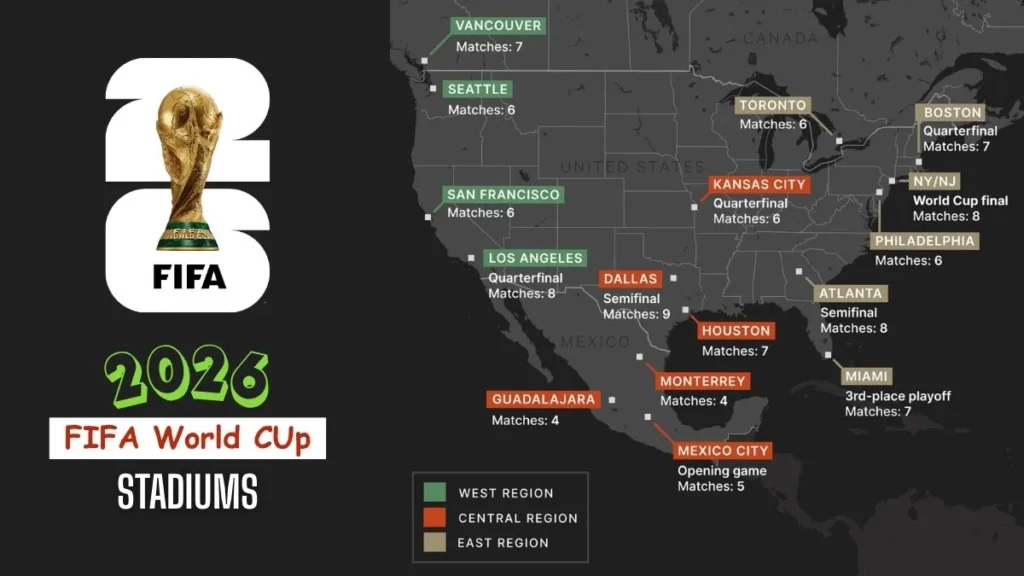
FIFA has strategically grouped host cities into three geographic regions to minimize travel fatigue for teams and fans. This regional approach ensures that group-stage matches are clustered, allowing for a more sustainable and fan-friendly tournament. Each of the FIFA World Cup 2026 stadiums has unique features…
1. Western Region (The Pacific Powerhouses)
The Western region features some of the most technologically advanced stadiums in North America. From the rain-soaked passion of Seattle to the sunny tech-hub of San Francisco, the West Coast is ready.
- Vancouver (BC Place): Canada’s premier indoor-outdoor stadium.
- Seattle (Lumen Field): Known for its deafening atmosphere.
- San Francisco Bay Area (Levi’s Stadium): A LEED Gold-certified masterpiece.
- Los Angeles (SoFi Stadium): The most expensive stadium ever built.
2. Central Region (The Heart of the Continent)
The Central region bridges the three nations, featuring high-altitude venues in Mexico and massive NFL stadiums in the US heartland.
- Kansas City (GEHA Field at Arrowhead Stadium): A legendary venue for American sports.
- Dallas (AT&T Stadium): Features the world’s largest high-definition video screen.
- Houston (NRG Stadium): A retractable roof venue perfect for Texas heat.
- Atlanta (Mercedes-Benz Stadium): Known for its “pinwheel” retractable roof.
- Monterrey (Estadio BBVA) & Mexico City (Estadio Azteca): The cultural soul of Mexican football.
3. Eastern Region (The Road to the Final)
The Eastern region will host many of the high-stakes knockout matches, culminating in the championship game in New Jersey.
- Toronto (BMO Field): Undergoing expansion to meet FIFA’s 45,000+ capacity rule.
- Boston (Gillette Stadium): A historic venue for both soccer and football.
- Philadelphia (Lincoln Financial Field): The “City of Brotherly Love” prepares for global fans.
- Miami (Hard Rock Stadium): Bringing the Caribbean flair to the World Cup.
- New York New Jersey (MetLife Stadium): The home of the 2026 Final.
New York New Jersey Stadium: The Ultimate Venue for the Final
The New York New Jersey Stadium (MetLife Stadium) has been officially designated as the host for the FIFA World Cup Final on July 19, 2026. Located in East Rutherford, NJ, just minutes from the world-famous Manhattan skyline, this 82,500-capacity giant is the centerpiece of the tournament.
The FIFA World Cup 2026 Stadiums have successfully transitioned from synthetic turf to a world-class natural grass pitch, a mandatory requirement from FIFA. For fans, the NY/NJ experience goes beyond the match. The FIFA Fan Festival at Liberty State Park offers breathtaking views of the Statue of Liberty while watching matches on massive screens.
- Matches Hosted: 8 Matches (including the Final).
- Travel Tip: Use the Meadowlands Rail Line from Secaucus Junction for the fastest access to the gates.
SoFi Stadium: The High-Tech Gateway in Los Angeles
Los Angeles and the SoFi Stadium will host the opening match for the United States National Team on June 12, 2026. This “stadium within a stadium” is a masterpiece of modern engineering, featuring a translucent canopy and a dual-sided 4K video board known as the “Infinity Screen.”
As a key host for the Western region, SoFi is expected to be a hub for celebrity sightings and high-profile international clashes. The surrounding Hollywood Park development will serve as a massive fan zone throughout June and July.
The Historic Return: Estadio Azteca, Mexico City
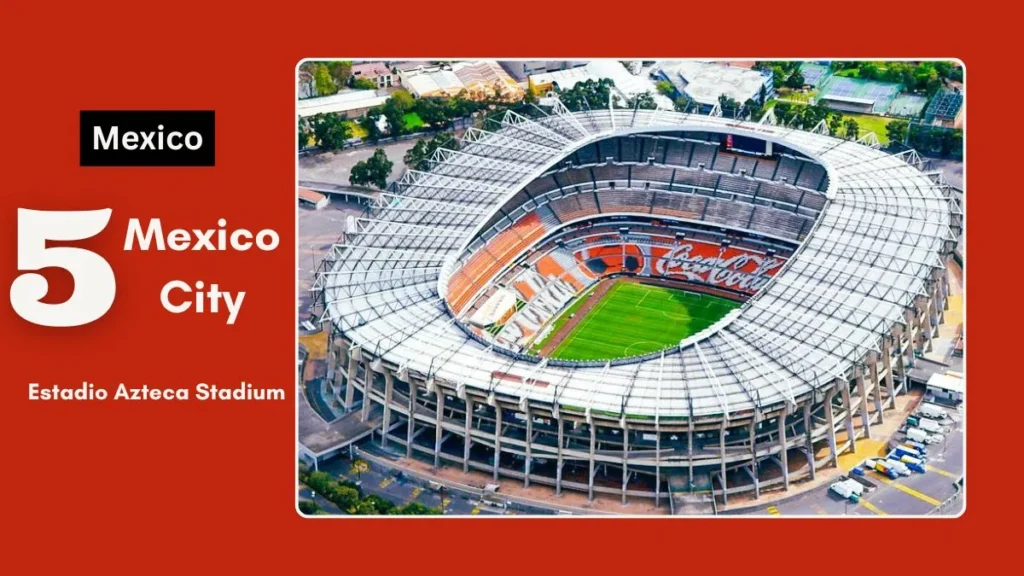
No stadium in the world carries the weight of history like the Estadio Azteca. Having hosted the 1970 and 1986 finals, it will become the first stadium to host matches in three different World Cups. On June 11, 2026, the Azteca will host the official opening ceremony and the tournament’s first match.
Extensive renovations completed in late 2025 have upgraded the seating, lighting, and VIP hospitality sections while preserving the intimidating atmosphere that makes it a fortress for the Mexican national team.
2026 Host Cities & Stadiums
| Country | Host City | Stadium (Tournament Name) | Highlights |
|---|---|---|---|
| United States | New York/NJ | MetLife Stadium | Host of the Final (July 19) |
| Dallas | AT&T Stadium | Hosting 9 matches (the most of any city) | |
| Los Angeles | SoFi Stadium | Host of the USMNT opening match | |
| Atlanta | Mercedes-Benz Stadium | Semifinal venue | |
| Other U.S. Cities | Boston, Houston, Kansas City, Miami, Philadelphia, San Francisco, Seattle | Regionalized travel zones (East, Central, West) | |
| Mexico | Mexico City | Estadio Azteca | Opening Match venue (June 11) |
| Guadalajara | Estadio Akron | Legendary cultural hub | |
| Monterrey | Estadio BBVA | Modern industrial hub near the U.S. border | |
| Canada | Toronto | BMO Field | Canada’s opening match (June 12) |
| Vancouver | BC Place | Key West Coast hub |
Stadium Infrastructure: What Makes a 2026 Venue?
FIFA’s requirements for 2026 were stricter than ever before. To rank among the top football destinations, each host city had to meet several “Green Standards” and infrastructure milestones: Here are FIFA World Cup 2026 Stadiums Infrastructure Key highlights:
- Natural Grass Only: Even stadiums with permanent turf (like SoFi and Mercedes-Benz) have installed temporary natural grass systems with advanced irrigation.
- Capacity Rules: Group matches require 40,000+ seats, while the Final requires 80,000+.
- Sustainability: Every venue has implemented zero-waste policies and renewable energy initiatives to make 2026 the “Greenest World Cup” ever.
2026 World Cup Group Stage Format: 12 Groups of 4

In a major shift from previous plans, FIFA confirmed the 12 groups of 4 teams format. This means more matches and more drama.
- The top 2 teams from each group advance.
- 8 best third-place teams also move to the new Round of 32.
- This format ensures that every team plays at least 3 matches, giving fans more value for their tickets.
Tickets and Fan Zones: How to Get Involved
The primary ticket phases have concluded, but a limited number of Last-Minute Sales are available on the official FIFA Ticketing Portal. Fans traveling to see the FIFA World Cup 2026 stadiums should plan early
Official Fan Festivals
If you don’t have a stadium ticket, the Fan Festivals are the place to be.
- Mexico City: Zócalo (Main Square).
- Toronto: Exhibition Place.
- New York: Central Park.
- Dallas: Fair Park.
Frequently Asked Questions (FAQs)
Where will the 2026 World Cup Final be played?
The Final will be played at the MetLife Stadium (New York New Jersey Stadium) on July 19, 2026.
How many stadiums are in Mexico and Canada?
Mexico has 3 host stadiums (Mexico City, Guadalajara, Monterrey), and Canada has 2 (Toronto, Vancouver). The remaining 11 are in the USA.
Will there be alcohol at the 2026 World Cup?
Yes, unlike the 2022 edition, alcohol sales will be permitted at designated areas within stadiums and at all official Fan Festivals across the three host nations.
What is the biggest stadium in the 2026 World Cup?
The AT&T Stadium in Dallas has the highest potential capacity, capable of holding over 94,000 fans for major matches.