
The FIFA World Cup 2026 is not just a sporting tournament; it is a massive economic engine. According to the latest financial projections released on February 17, 2026, the event is set to trigger a staggering $556 million in direct event-related visitor spending across the 11 U.S. host cities.
As the first 48-team tournament in history, the scale of the 2026 edition is unprecedented. For the United States, Canada, and Mexico, the “beautiful game” is translating into beautiful numbers for local businesses and the hospitality sector.
Breaking Down the $556M: Where is the FIFA World Cup 2026 Money Going?
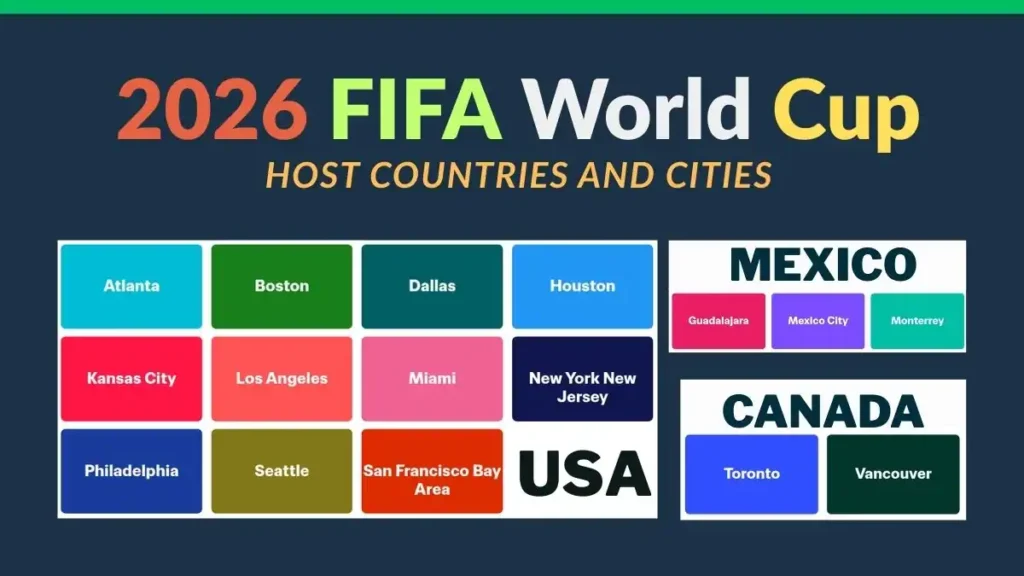
The $556 million figure represents a pre-event analysis by The Data Appeal Company and Mabrian. This spending is primarily driven by three key categories:
- Food and Beverage ($280 Million): Representing 50% of total spend, this is the largest winner of the tournament.
- Accommodation ($181 Million): Hotels and short-term rentals in host cities are seeing a 32.5% share of the economic pie.
- Transportation ($95 Million): Local transit and domestic flights account for the remaining 17% of the surge.
Top 5 Beneficiary Cities in the USA
While all 11 U.S. host cities will benefit, the spending is highly concentrated. The top five destinations alone are forecast to capture 52 percent of the total projected spending.
| Host City | Projected Spending | Share of Total |
|---|---|---|
| East Rutherford (NY/NJ) | $67 Million | 12% |
| Inglewood (Los Angeles) | $59 Million | 10.6% |
| Arlington (Dallas) | $58 Million | 10.4% |
| Atlanta | $52 Million | 9.3% |
| Seattle | $51 Million | 9.2% |
The “Visitor Dwell Time” Effect
Economic experts highlight that the “dwell time” (the amount of time fans spend in a city) is the biggest driver of revenue. With match attendance being the primary driver, cities with large-capacity stadiums like MetLife Stadium and SoFi Stadium are naturally seeing the highest returns.
“Attendance volume is the strongest driver of spending. These results show how sharply economic impact scales with visitor volume, especially in the largest, best-connected host cities.” – Mirko Lalli, CEO of The Data Appeal Company.
Why Fans Are Spending More
From a travel perspective, fans are not just attending games; they are turning the World Cup into a full-scale summer vacation. This opens up massive opportunities for:
- Luxury Hotels: Average daily rates in New York and LA are expected to spike by 90%.
- Car Rentals: High demand for “Road Trip” travel between host hubs.
- Travel Insurance: Increased awareness of trip protection for international visitors.
Frequently Asked Questions (FAQ)
Which city will make the most money from the World Cup?
Currently, East Rutherford (New York/New Jersey) leads all U.S. host cities with a projected $67 million in direct visitor spending, thanks to its high match density and stadium capacity.
What is the biggest spending category for fans?
Food and Beverages is the top category, accounting for exactly 50% ($280M) of the total projected spend across the United States.
Will Canadian cities see a similar impact?
Yes, while this specific $556M report focuses on the U.S., cities like Toronto and Vancouver are expecting their own multi-million dollar surges, with Seattle already predicting a regional impact of over $900 million.