


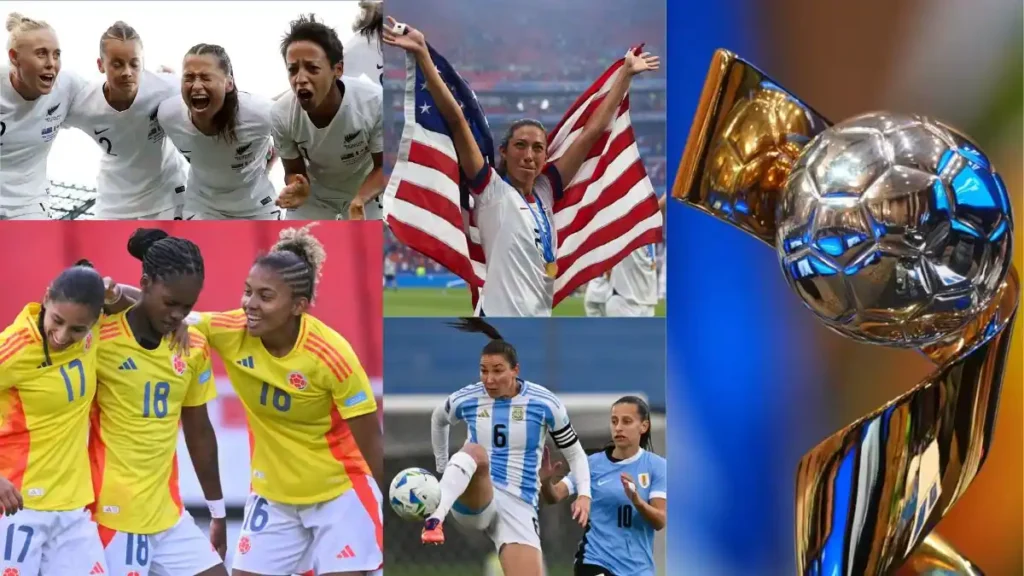
The 2027 FIFA Women’s World Cup will mark a historic milestone in women’s Soccer as the first FIFA Women’s World Cup to be held in South America. From June 24 to July 25, 2027, the 10th edition of the tournament will bring together 32 teams to compete in Brazil’s legendary Soccer stadiums.
Brazil will become the sixth country—after Sweden, the United States, Germany, France, and Canada —to host both the Men’s and Women’s World Cup, having previously hosted the Men’s tournament in 1950 and 2014. Spain enters as defending champions after claiming their first title in 2023.
This will be the second and last edition of the tournament to be contested by 32 teams, with FIFA confirming an expansion to 48 teams for the next edition in the 2031 Women’s World Cup.
Find out 2027 FIFA Women’s World Cup key information about the Women’s upcoming edition of the global showpiece, which will be hosted by Brazil.
2027 FIFA Women’s World Cup Bid, Stadiums, Format, Teams and Qualification Schedule

Brazil hosting the 2027 FIFA Women’s World Cup is a landmark moment for the women’s game — the first time the tournament will be held in South America and a huge opportunity to accelerate investment, interest, and pathways for female players across the continent.
The tournament will take place from June 24 to July 25, 2027, featuring 32 teams across eight Brazilian host cities, all equipped with top-tier stadiums and facilities.
Bidding Process
Bidding started on March 23, 2023. Member associations were required to submit declarations of interest by April 21 and complete bidding registrations by December 8. Initially, fourteen countries expressed interest, including several joint bids from multiple nations.
The final contenders were:
- Brazil (solo bid)
- Belgium-Germany-Netherlands (joint bid)
- United States-Mexico (merged their initially separate bids)
Several countries, including Chile, Italy, South Africa, and a Nordic joint bid (Denmark, Finland, Iceland, Norway, and Sweden), have withdrawn their bids, with some expressing interest in hosting the 2031 tournament instead.
The voting occurred on May 17, 2024, during the 74th FIFA Congress in Bangkok, and it was open to 207 eligible members. The Brazilian bid received 119 valid votes, while the Belgium–Germany–Netherlands bid garnered 78 valid votes.
Host Cities and Stadiums
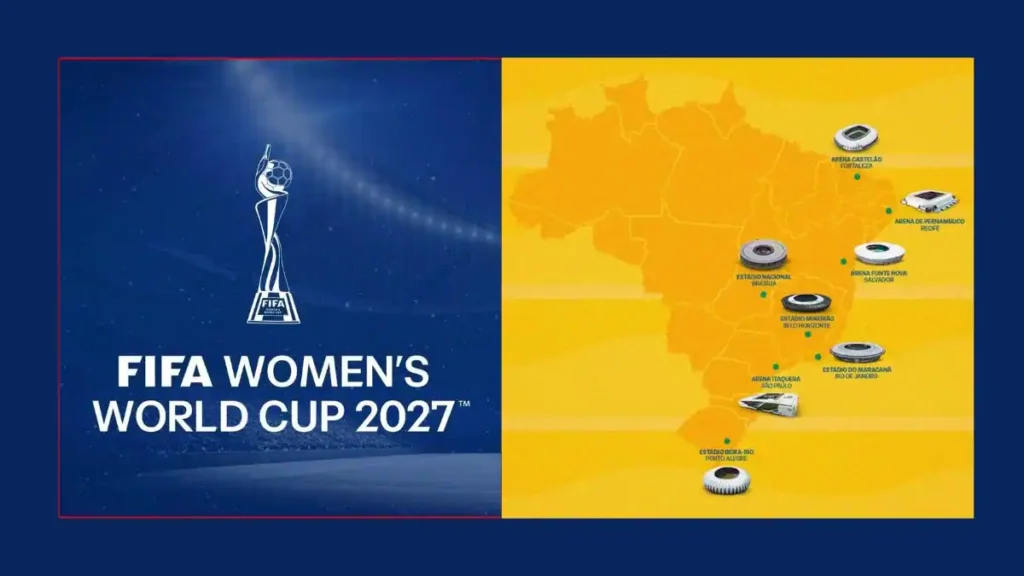
FIFA has confirmed eight host cities and stadiums across Brazil, ranging from the vibrant energy and infrastructure of São Paulo to regional hubs that bring the tournament closer to fans nationwide.
The selection aims to highlight Brazil’s rich Soccer culture while making use of upgraded existing stadiums instead of constructing entirely new ones.
- Rio de Janeiro – Maracanã Stadium (Capacity: 78,838)
- São Paulo – Arena Itaquera/NeoQuímica Arena (Capacity: 47,605)
- Belo Horizonte – Mineirão Stadium (Capacity: 61,846)
- Brasília – Estádio Nacional (Capacity: 72,788)
- Fortaleza – Arena Castelão (Capacity: 63,903)
- Porto Alegre – Estádio Beira-Rio (Capacity: 50,128)
- Recife – Arena Pernambuco (Capacity: 44,248)
- Salvador – Arena Fonte Nova (Capacity: 47,907)
Reports suggest that both the opening match and final could be held at Rio’s legendary Maracanã, though FIFA has not officially confirmed these details yet.
Tournament Format
The 2027 FIFA Women’s World Cup tournament will feature the standard format established in 2023: a group stage with eight groups of four teams each, followed by a knockout phase. The top two teams from each group will advance to the round of 16, with 64 matches played in total throughout the tournament.
Qualification Process: A Global Competition
With Brazil qualifying automatically as hosts, 31 spots remain available through an extensive 2027 FIFA Women’s World Cup qualification process across all six continental confederations.
Qualification began on February 19, 2025, and will conclude in early 2027.
Slot Allocation by Confederation
The FIFA Council approved the allocation of the following slots on December 10, 2024.
- UEFA (Europe): 11 spots + 1 playoff berth
- AFC (Asia): 6 spots + 2 playoff berths
- CAF (Africa): 4 spots + 2 playoff berths
- CONCACAF (North/Central America & Caribbean): 4 spots + 2 playoff berths
- CONMEBOL (South America): 3 spots (including Brazil) + 2 playoff berths
- OFC (Oceania): 1 spot + 1 playoff berth
- Inter-confederation playoffs: 3 spots
UEFA (Europe) – 11 Qualifiers
European qualification uses the innovative UEFA Women’s Nations League structure, split into three leagues:
League Structure:
- League A: 16 teams in 4 groups of 4
- League B: 16 teams in 4 groups of 4
- League C: 21 teams in groups of 3 or 4
The winners of each League A group will gain automatic places in Brazil. These four group winners will be the first European teams to qualify.
Notable League A Groups:
- England, Spain, Iceland, Ukraine
- France, Netherlands, Poland, Republic of Ireland
- Germany, Portugal, Türkiye, Switzerland
The remaining seven European spots plus one playoff berth will be determined through a complex two-round playoff system in October and November/December 2026, with matches scheduled between teams from different leagues based on their rankings.
Key Dates:
- Qualifying matchdays: February-June 2026
- Playoff round 1: October 7-13, 2026
- Playoff round 2: November 26-December 5, 2026
AFC (Asia) – 6 Qualifiers
Asia’s qualification route runs through the AFC Women’s Asian Cup 2026, hosted by Australia from March 1 to 21, 2026. The tournament serves double duty as both a continental championship and World Cup qualifier.
Tournament Structure: Twelve teams are divided into three groups of four. The top two from each group plus the two best third-placed teams advance to the quarterfinals. The four semi-finalists automatically qualify for the World Cup, while the two losing quarterfinalists enter the inter-confederation playoffs.
Sample Groups:
- Group A: Australia, South Korea, Iran, Philippines
- Group B: North Korea, China, Bangladesh, Uzbekistan
- Group C: Japan, Vietnam, India, Chinese Taipei
Australia participates in Asian qualification despite their Oceanian geography, having switched to the AFC in 2006 for better competition and more direct World Cup qualification pathways.
CAF (Africa) – 4 Qualifiers
Africa’s qualification runs through the Women’s Africa Cup of Nations 2026 (WAFCON), hosted by Morocco from March 17 to April 3, 2026. The continental championship determines which African teams advance to the World Cup, with the top four finishers qualifying directly and two additional teams entering the playoff tournament.
CONCACAF (North/Central America) – 4 Qualifiers
The CONCACAF qualification features a final tournament format with eight nations competing in a knockout competition scheduled for November 2025. The four quarterfinalists qualify directly for the World Cup, while the four losing quarterfinalists compete for two spots in the inter-confederation playoffs.
The United States and Canada, traditionally dominant in the region, are expected to qualify, though the competition has become increasingly competitive in recent years.
CONMEBOL (South America) – 3 Qualifiers (Including Brazil)
South America’s qualification process is managed through a new dedicated competition, the CONMEBOL Women’s World Cup Qualifying League, which runs from October 2025 to mid-2026. This represents the first time CONMEBOL has organized a standalone World Cup qualifying tournament for women.
The nine remaining South American nations (excluding host Brazil) compete in a round-robin format playing home and away matches. The top two teams qualify directly, while the third and fourth-placed teams advance to the inter-confederation playoffs.
The tournament began in October 2025 and features traditional powers like Argentina, Colombia, Paraguay, and Chile competing for limited spots.
OFC (Oceania) – 1 Qualifier
Oceania’s pathway consists of three rounds running from November 2025 through April 2026. The lowest-ranked nations compete in preliminary knockout rounds, with survivors advancing to a final tournament. The winner claims Oceania’s sole direct qualification spot, while the runner-up enters the playoff tournament.
New Zealand, having been co-hosts in 2023, is the clear favorite to claim the region’s berth, especially with Australia now competing in Asian qualification.
Inter-Confederation Playoffs: The Final Pathway
Ten teams will advance to a play-off tournament to determine the final three teams to qualify for the 2027 FIFA Women’s World Cup: two teams each from AFC, CAF, CONCACAF, and CONMEBOL, and one team each from OFC and UEFA.
The playoff tournament operates in two phases:
First Phase (November-December 2026): Six teams compete – two each from AFC and CAF, one from OFC, and the lower-ranked CONMEBOL team. The top two teams advance to the second phase.
Second Phase (February 2027): The two teams advancing from the first phase will join two teams from CONCACAF, the higher-ranked team from CONMEBOL, and one from UEFA. These six teams are drawn into three knockout matches, with the three winners securing the final World Cup spots.
The playoff matches will be held in Brazil at World Cup venues, giving fans an early taste of the tournament atmosphere.
Current Qualification Status
As of late November 2025, qualification is well underway across all confederations:
- African qualifiers began in February 2025
- Asian qualifying groups completed in mid-2025
- South American round-robin is currently in progress
- European league phase begins in February 2026
- CONCACAF final tournament scheduled for late 2025
- Oceania preliminaries started in November 2025
The first teams to officially qualify (beyond host Brazil) will be determined in early 2026, with the final three spots not decided until February 2027.
Key players in 2027 FIFA Women’s World Cup

Dudinha (Maria Eduarda Rodrigues Silva)
- Dudinha is seen as a breakout star for Brazil. At just 20, she’s already impressed in friendlies against top European sides.
- Her pace, attacking instincts and youth give Brazil a potent edge — especially valuable at a World Cup hosted on home soil.
Marta
- Marta remains arguably the greatest female footballer of all time, with a record 122 goals for Brazil as of 2025.
- While her age raises questions about fitness for 2027, her experience, leadership and clinical finishing — especially on home turf — make her a symbolic and strategic asset.
Together, Dudinha and Marta represent a blend of youthful potential and legendary experience — ideal for a host-nation aiming to shine on the global stage.
Aitana Bonmatí (Spain / FC Barcelona)
- Widely regarded among the best midfielders in the world: her vision, ball-control and ability to control tempo make her a midfield anchor.
- Her experience, club success and international pedigree make her a major threat and creative engine for Spain’s sides going into 2027.
Alexia Putellas (Spain / FC Barcelona)
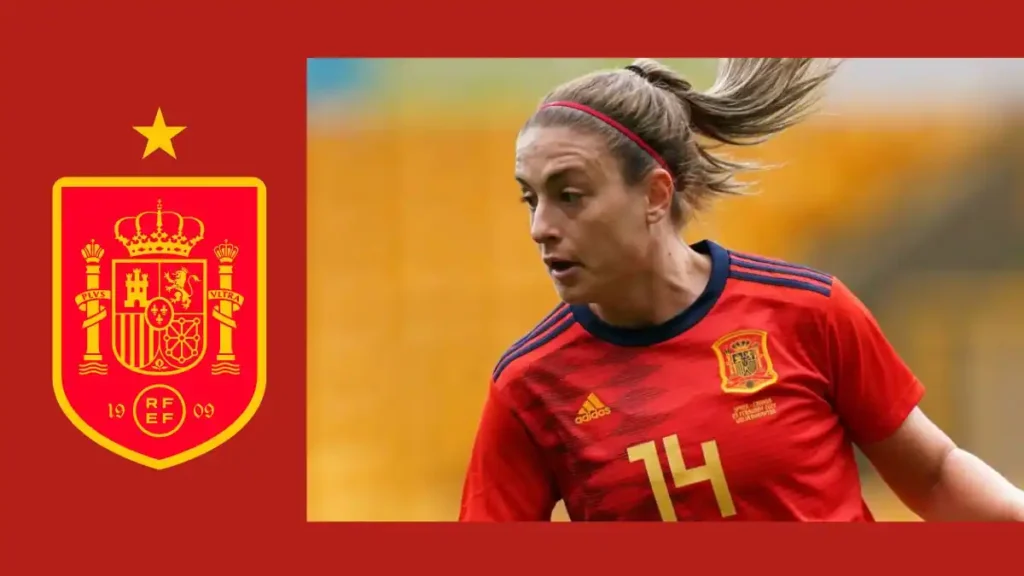
- A midfield maestro with tremendous experience — her passing, vision, and ability to contribute offensively and defensively make her a central figure in Spain’s setup.
- Her leadership and big-game experience are especially valuable in long tournaments like a World Cup.
Ada Hegerberg (Norway / Lyon)
- One of the most prolific strikers in women’s football. Known for her physicality, finishing ability and consistency at club and international levels.
- If fit and in form by 2027, she could be a key attacking threat, especially for teams that rely on her scoring instincts and leadership.
2027 FIFA Women’s World Cup Historical Context
This tournament represents a significant milestone for women’s Soccer in South America, a region renowned for its rich Soccer heritage but with a limited history of hosting international women’s events.
Brazil has produced some of the sport’s most iconic talents, including Marta, who is often regarded as one of the greatest female Soccer of all time.
The 2023 Women’s World Cup in Australia and New Zealand set new attendance and viewership records, raising expectations for Brazil 2027 to continue the sport’s explosive growth. FIFA’s decision to expand to 48 teams by 2031 reflects the increasing global competitiveness and popularity of women’s Soccer.
Looking Ahead
With qualification underway and preparations in full swing, the 2027 FIFA Women’s World Cup is shaping up to be a truly memorable event. Set against Brazil’s passionate Soccer culture, legendary stadiums, and lively cities, the tournament will highlight the very best of women’s Soccer.
As teams fight for their spots over the coming year, fans around the world are eagerly looking forward to an unforgettable summer of sport in South America.